How Allowing Volunteers to Manage Their Own Shifts Can Boost Engagement
How Allowing Volunteers to Manage Their Own Shifts Can Boost Engagement
How Allowing Volunteers to Manage Their Own Shifts Can Boost Engagement

Volunteero
Volunteero
27 Jan 2026
27 Jan 2026

Share
Share
How Allowing Volunteers to Manage Their Own Shifts Can Boost Engagement
One of the most consistent challenges volunteer coordinators face is engagement - not just recruiting volunteers, but keeping them active, reliable, and motivated over time.
While many organisations focus on communications or incentives, one of the most effective (and often overlooked) engagement strategies is much simpler:
Giving volunteers control over their own shifts.
When volunteers are trusted to manage their availability and commitments themselves, engagement increases - and administrative burden decreases. Platforms like Volunteero are enabling organisations to make this shift safely, at scale, and with measurable results.
Why shift control matters to volunteers
Volunteers today balance work, family, study, and other commitments. Rigid schedules or coordinator-managed rostering can unintentionally create friction, even when volunteers are enthusiastic.
Common frustrations include:
Waiting for confirmation before knowing when they’re needed
Having to email or call to change availability
Feeling guilty about declining shifts
Losing confidence if they miss opportunities
When volunteers can manage their own shifts, these pain points largely disappear.
Autonomy builds engagement and accountability
Allowing volunteers to self-manage shifts creates a sense of ownership.
Volunteers who choose their own commitments are:
More likely to show up
More likely to stay engaged long-term
More confident in managing their time
Less likely to disengage silently
In Volunteero-supported programmes, organisations often report that volunteers feel “trusted” rather than “managed” - a subtle but powerful shift in mindset.
We have often seen organizations seeking to maintain a list of volunteer “availability” and then use that to assign shifts. Unfortunately this just doesn’t account for the realities of life for many. Think of your own schedule, even with the best planning in the world, things can crop up, plans change. Volunteero offers a platform that aligns with the reality of most volunteers.
How traditional systems limit self-management
Many traditional volunteer management systems were not designed for volunteer autonomy. They typically:
Require coordinators to assign or approve every shift
Hide opportunities behind admin-only workflows
Use email chains or spreadsheets to manage changes
As programmes grow, this approach becomes time-consuming and discouraging for both staff and volunteers.
How Volunteero enables volunteer-led shift management
Volunteero is built with volunteer self-service at its core, while still giving organisations the control and safeguards they need.
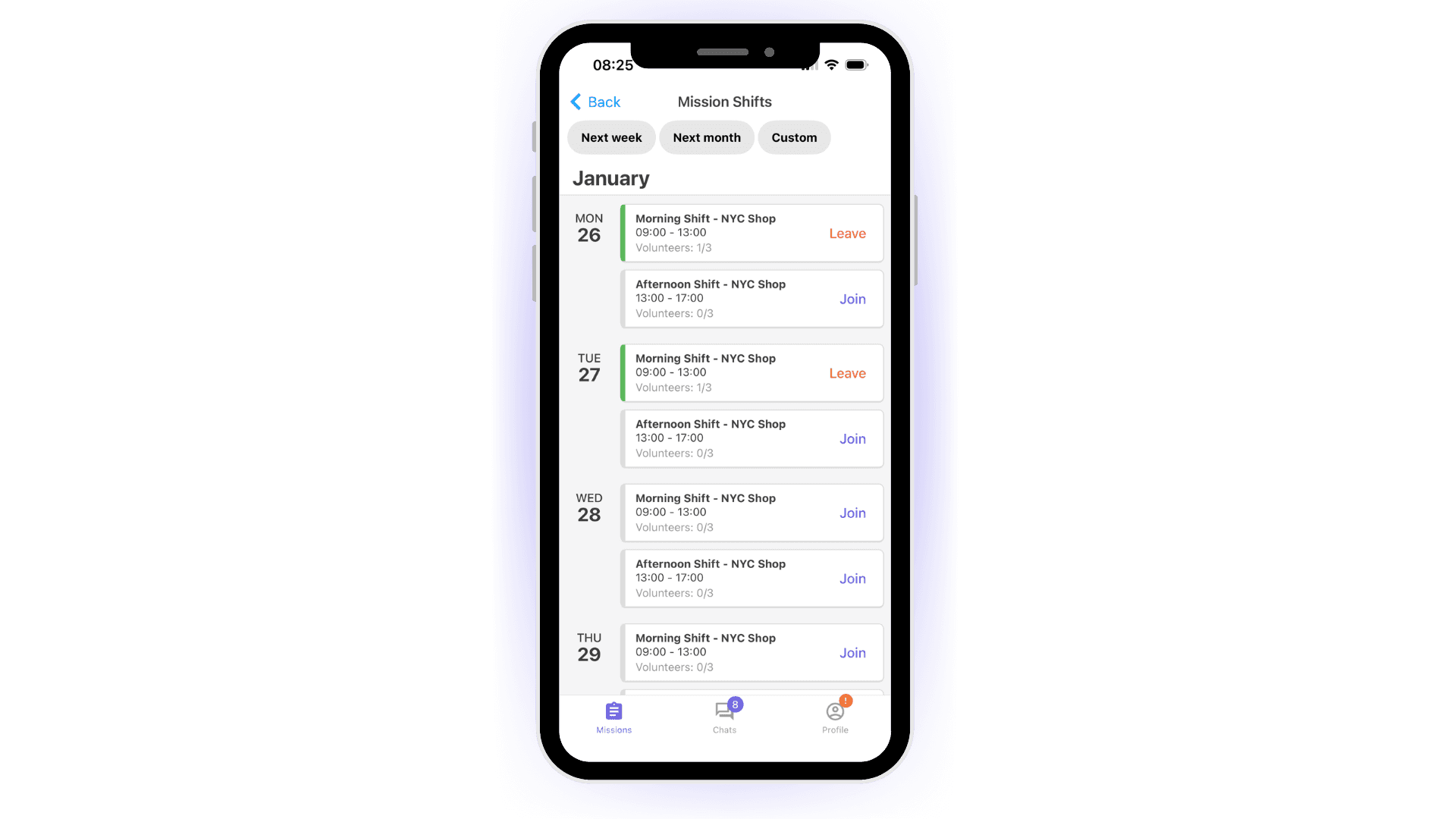
1. Volunteers can view and sign up for available shifts
Using Volunteero, volunteers can:
See available shifts in real time
Choose shifts that fit their schedule
Receive instant confirmation where appropriate
This removes delays and reduces drop-off caused by waiting for manual approval.
Client outcome:
The Winter Special Olympics in Turin in 2025 used Volunteero and made a key switch to this volunteer led approach. Where previously they would assign based on availability captured months before and then having to spend a vast amount of time making changes where volunteer availability had changed. In the new model they filled 95% of their thousands of shifts across the major event within a day of publishing them.
2. Built-in rules maintain safety and compliance
Self-management does not mean lack of oversight.
Volunteero allows organisations to:
Restrict shifts by role, training, or accreditation
Require completion of onboarding or e-learning before access
Apply limits on how many shifts a volunteer can book
This ensures the right volunteers take the right shifts - automatically.
Client outcome:
Many of our clients like the Oxford University NHS Trust have strict compliance rules and need to ensure volunteers on certain shifts have the correct certifications and trainings. They use Volunteero’s groups and qualifications restrictions functionality to still offer the volunteer led approach but in a compliant framework where volunteers not meeting certain criteria either wouldn't even see certain shifts they should not or could not claim a shift until they are fully qualified. As a result they saw volunteer engagement increase and meaningful staff time savings.
3. Automated reminders reduce no-shows
One concern organisations often raise is reliability. Volunteero addresses this with automation.
Volunteers receive:
Automated shift confirmations
Timely reminders before their shift
Clear details on time, location, and expectations
One click option to add it to their own calendar (Google, Microsoft or Apple)
This clarity significantly reduces missed shifts.
Client outcome:
Many Volunteero clients have seen fewer last-minute cancellations after introducing automated reminders alongside self-managed scheduling.
4. Easy changes without awkward conversations
Life happens. When volunteers can manage changes themselves, they are less likely to disengage entirely.
With Volunteero, volunteers can:
Cancel or change shifts within defined rules
See alternative opportunities instantly
Stay connected rather than dropping out
This flexibility helps organisations retain volunteers who might otherwise disappear after one scheduling conflict.
The hidden benefit: reduced coordinator workload
Beyond engagement, volunteer-managed shifts dramatically reduce administration.
Coordinators spend less time:
Manually assigning shifts
Responding to availability emails
Updating spreadsheets or calendars
Chasing confirmations
Instead, they can focus on:
Supporting volunteers
Improving programmes
Building relationships
Many Volunteero clients describe this as one of the most immediate and tangible benefits after implementation.
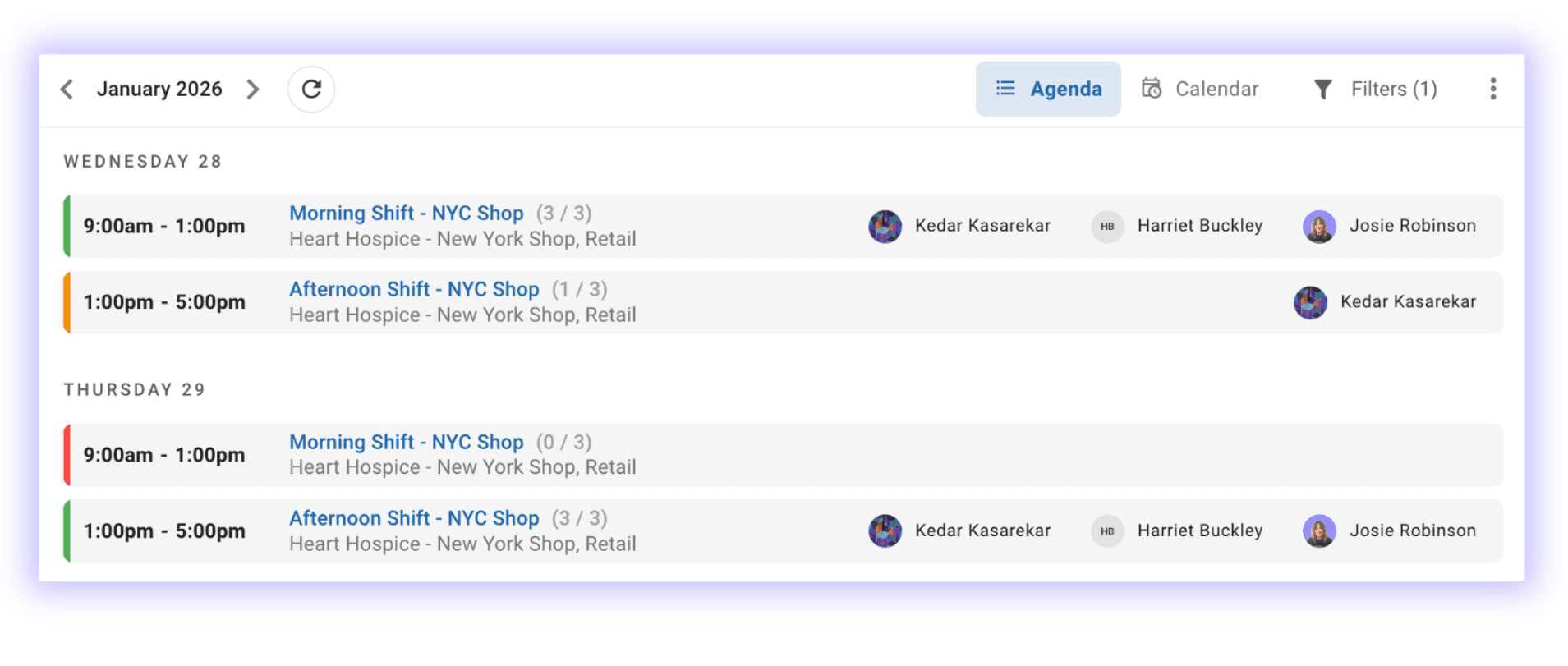
Our client, the University Blood and Cancer Center released their shifts for the month ahead and they now inform us that all 250+ shifts are completely filled within 5 minutes from publishing. This process used to take their team many hours each week and now that is time they have to allocate to volunteer development.
Trust drives retention
At its core, allowing volunteers to manage their own shifts sends a clear message:
We trust you.
That trust translates into:
Higher engagement
Better retention
Stronger volunteer relationships
Volunteero enables organisations to offer this trust at scale - without sacrificing control, safety, or visibility.
A smarter way to engage volunteers
Volunteer engagement isn’t only about communication or motivation. It’s about designing systems that respect volunteers’ time and autonomy.
By enabling volunteers to manage their own shifts - supported by automation, clear rules, and real-time information - organisations create programmes that are easier to run and more rewarding to be part of.
Volunteero helps make that possible.
Interested in seeing how volunteer-led shift management works in practice?
We’d be happy to show you how Volunteero supports flexible scheduling, automated safeguards, and better engagement through a short demo.
How Allowing Volunteers to Manage Their Own Shifts Can Boost Engagement
One of the most consistent challenges volunteer coordinators face is engagement - not just recruiting volunteers, but keeping them active, reliable, and motivated over time.
While many organisations focus on communications or incentives, one of the most effective (and often overlooked) engagement strategies is much simpler:
Giving volunteers control over their own shifts.
When volunteers are trusted to manage their availability and commitments themselves, engagement increases - and administrative burden decreases. Platforms like Volunteero are enabling organisations to make this shift safely, at scale, and with measurable results.
Why shift control matters to volunteers
Volunteers today balance work, family, study, and other commitments. Rigid schedules or coordinator-managed rostering can unintentionally create friction, even when volunteers are enthusiastic.
Common frustrations include:
Waiting for confirmation before knowing when they’re needed
Having to email or call to change availability
Feeling guilty about declining shifts
Losing confidence if they miss opportunities
When volunteers can manage their own shifts, these pain points largely disappear.
Autonomy builds engagement and accountability
Allowing volunteers to self-manage shifts creates a sense of ownership.
Volunteers who choose their own commitments are:
More likely to show up
More likely to stay engaged long-term
More confident in managing their time
Less likely to disengage silently
In Volunteero-supported programmes, organisations often report that volunteers feel “trusted” rather than “managed” - a subtle but powerful shift in mindset.
We have often seen organizations seeking to maintain a list of volunteer “availability” and then use that to assign shifts. Unfortunately this just doesn’t account for the realities of life for many. Think of your own schedule, even with the best planning in the world, things can crop up, plans change. Volunteero offers a platform that aligns with the reality of most volunteers.
How traditional systems limit self-management
Many traditional volunteer management systems were not designed for volunteer autonomy. They typically:
Require coordinators to assign or approve every shift
Hide opportunities behind admin-only workflows
Use email chains or spreadsheets to manage changes
As programmes grow, this approach becomes time-consuming and discouraging for both staff and volunteers.
How Volunteero enables volunteer-led shift management
Volunteero is built with volunteer self-service at its core, while still giving organisations the control and safeguards they need.
1. Volunteers can view and sign up for available shifts
Using Volunteero, volunteers can:
See available shifts in real time
Choose shifts that fit their schedule
Receive instant confirmation where appropriate
This removes delays and reduces drop-off caused by waiting for manual approval.
Client outcome:
The Winter Special Olympics in Turin in 2025 used Volunteero and made a key switch to this volunteer led approach. Where previously they would assign based on availability captured months before and then having to spend a vast amount of time making changes where volunteer availability had changed. In the new model they filled 95% of their thousands of shifts across the major event within a day of publishing them.
2. Built-in rules maintain safety and compliance
Self-management does not mean lack of oversight.
Volunteero allows organisations to:
Restrict shifts by role, training, or accreditation
Require completion of onboarding or e-learning before access
Apply limits on how many shifts a volunteer can book
This ensures the right volunteers take the right shifts - automatically.
Client outcome:
Many of our clients like the Oxford University NHS Trust have strict compliance rules and need to ensure volunteers on certain shifts have the correct certifications and trainings. They use Volunteero’s groups and qualifications restrictions functionality to still offer the volunteer led approach but in a compliant framework where volunteers not meeting certain criteria either wouldn't even see certain shifts they should not or could not claim a shift until they are fully qualified. As a result they saw volunteer engagement increase and meaningful staff time savings.
3. Automated reminders reduce no-shows
One concern organisations often raise is reliability. Volunteero addresses this with automation.
Volunteers receive:
Automated shift confirmations
Timely reminders before their shift
Clear details on time, location, and expectations
One click option to add it to their own calendar (Google, Microsoft or Apple)
This clarity significantly reduces missed shifts.
Client outcome:
Many Volunteero clients have seen fewer last-minute cancellations after introducing automated reminders alongside self-managed scheduling.
4. Easy changes without awkward conversations
Life happens. When volunteers can manage changes themselves, they are less likely to disengage entirely.
With Volunteero, volunteers can:
Cancel or change shifts within defined rules
See alternative opportunities instantly
Stay connected rather than dropping out
This flexibility helps organisations retain volunteers who might otherwise disappear after one scheduling conflict.
The hidden benefit: reduced coordinator workload
Beyond engagement, volunteer-managed shifts dramatically reduce administration.
Coordinators spend less time:
Manually assigning shifts
Responding to availability emails
Updating spreadsheets or calendars
Chasing confirmations
Instead, they can focus on:
Supporting volunteers
Improving programmes
Building relationships
Many Volunteero clients describe this as one of the most immediate and tangible benefits after implementation.
Our client, the University Blood and Cancer Center released their shifts for the month ahead and they now inform us that all 250+ shifts are completely filled within 5 minutes from publishing. This process used to take their team many hours each week and now that is time they have to allocate to volunteer development.
Trust drives retention
At its core, allowing volunteers to manage their own shifts sends a clear message:
We trust you.
That trust translates into:
Higher engagement
Better retention
Stronger volunteer relationships
Volunteero enables organisations to offer this trust at scale - without sacrificing control, safety, or visibility.
A smarter way to engage volunteers
Volunteer engagement isn’t only about communication or motivation. It’s about designing systems that respect volunteers’ time and autonomy.
By enabling volunteers to manage their own shifts - supported by automation, clear rules, and real-time information - organisations create programmes that are easier to run and more rewarding to be part of.
Volunteero helps make that possible.
Interested in seeing how volunteer-led shift management works in practice?
We’d be happy to show you how Volunteero supports flexible scheduling, automated safeguards, and better engagement through a short demo.
How Allowing Volunteers to Manage Their Own Shifts Can Boost Engagement
One of the most consistent challenges volunteer coordinators face is engagement - not just recruiting volunteers, but keeping them active, reliable, and motivated over time.
While many organisations focus on communications or incentives, one of the most effective (and often overlooked) engagement strategies is much simpler:
Giving volunteers control over their own shifts.
When volunteers are trusted to manage their availability and commitments themselves, engagement increases - and administrative burden decreases. Platforms like Volunteero are enabling organisations to make this shift safely, at scale, and with measurable results.
Why shift control matters to volunteers
Volunteers today balance work, family, study, and other commitments. Rigid schedules or coordinator-managed rostering can unintentionally create friction, even when volunteers are enthusiastic.
Common frustrations include:
Waiting for confirmation before knowing when they’re needed
Having to email or call to change availability
Feeling guilty about declining shifts
Losing confidence if they miss opportunities
When volunteers can manage their own shifts, these pain points largely disappear.
Autonomy builds engagement and accountability
Allowing volunteers to self-manage shifts creates a sense of ownership.
Volunteers who choose their own commitments are:
More likely to show up
More likely to stay engaged long-term
More confident in managing their time
Less likely to disengage silently
In Volunteero-supported programmes, organisations often report that volunteers feel “trusted” rather than “managed” - a subtle but powerful shift in mindset.
We have often seen organizations seeking to maintain a list of volunteer “availability” and then use that to assign shifts. Unfortunately this just doesn’t account for the realities of life for many. Think of your own schedule, even with the best planning in the world, things can crop up, plans change. Volunteero offers a platform that aligns with the reality of most volunteers.
How traditional systems limit self-management
Many traditional volunteer management systems were not designed for volunteer autonomy. They typically:
Require coordinators to assign or approve every shift
Hide opportunities behind admin-only workflows
Use email chains or spreadsheets to manage changes
As programmes grow, this approach becomes time-consuming and discouraging for both staff and volunteers.
How Volunteero enables volunteer-led shift management
Volunteero is built with volunteer self-service at its core, while still giving organisations the control and safeguards they need.
1. Volunteers can view and sign up for available shifts
Using Volunteero, volunteers can:
See available shifts in real time
Choose shifts that fit their schedule
Receive instant confirmation where appropriate
This removes delays and reduces drop-off caused by waiting for manual approval.
Client outcome:
The Winter Special Olympics in Turin in 2025 used Volunteero and made a key switch to this volunteer led approach. Where previously they would assign based on availability captured months before and then having to spend a vast amount of time making changes where volunteer availability had changed. In the new model they filled 95% of their thousands of shifts across the major event within a day of publishing them.
2. Built-in rules maintain safety and compliance
Self-management does not mean lack of oversight.
Volunteero allows organisations to:
Restrict shifts by role, training, or accreditation
Require completion of onboarding or e-learning before access
Apply limits on how many shifts a volunteer can book
This ensures the right volunteers take the right shifts - automatically.
Client outcome:
Many of our clients like the Oxford University NHS Trust have strict compliance rules and need to ensure volunteers on certain shifts have the correct certifications and trainings. They use Volunteero’s groups and qualifications restrictions functionality to still offer the volunteer led approach but in a compliant framework where volunteers not meeting certain criteria either wouldn't even see certain shifts they should not or could not claim a shift until they are fully qualified. As a result they saw volunteer engagement increase and meaningful staff time savings.
3. Automated reminders reduce no-shows
One concern organisations often raise is reliability. Volunteero addresses this with automation.
Volunteers receive:
Automated shift confirmations
Timely reminders before their shift
Clear details on time, location, and expectations
One click option to add it to their own calendar (Google, Microsoft or Apple)
This clarity significantly reduces missed shifts.
Client outcome:
Many Volunteero clients have seen fewer last-minute cancellations after introducing automated reminders alongside self-managed scheduling.
4. Easy changes without awkward conversations
Life happens. When volunteers can manage changes themselves, they are less likely to disengage entirely.
With Volunteero, volunteers can:
Cancel or change shifts within defined rules
See alternative opportunities instantly
Stay connected rather than dropping out
This flexibility helps organisations retain volunteers who might otherwise disappear after one scheduling conflict.
The hidden benefit: reduced coordinator workload
Beyond engagement, volunteer-managed shifts dramatically reduce administration.
Coordinators spend less time:
Manually assigning shifts
Responding to availability emails
Updating spreadsheets or calendars
Chasing confirmations
Instead, they can focus on:
Supporting volunteers
Improving programmes
Building relationships
Many Volunteero clients describe this as one of the most immediate and tangible benefits after implementation.
Our client, the University Blood and Cancer Center released their shifts for the month ahead and they now inform us that all 250+ shifts are completely filled within 5 minutes from publishing. This process used to take their team many hours each week and now that is time they have to allocate to volunteer development.
Trust drives retention
At its core, allowing volunteers to manage their own shifts sends a clear message:
We trust you.
That trust translates into:
Higher engagement
Better retention
Stronger volunteer relationships
Volunteero enables organisations to offer this trust at scale - without sacrificing control, safety, or visibility.
A smarter way to engage volunteers
Volunteer engagement isn’t only about communication or motivation. It’s about designing systems that respect volunteers’ time and autonomy.
By enabling volunteers to manage their own shifts - supported by automation, clear rules, and real-time information - organisations create programmes that are easier to run and more rewarding to be part of.
Volunteero helps make that possible.
Interested in seeing how volunteer-led shift management works in practice?
We’d be happy to show you how Volunteero supports flexible scheduling, automated safeguards, and better engagement through a short demo.


©2026, Volunteero All Rights Reserved
©2026, Volunteero All Rights Reserved
©2026, Volunteero All Rights Reserved