How to Make Volunteer Recognition Simple, Consistent, and Automated
How to Make Volunteer Recognition Simple, Consistent, and Automated
How to Make Volunteer Recognition Simple, Consistent, and Automated

Volunteero
Volunteero
30 Jan 2026
30 Jan 2026

Share
Share
How to Make Volunteer Recognition Simple, Consistent, and Automated
Volunteer recognition is widely understood to be important - yet many organisations struggle to do it consistently.
Not because they don’t care, but because recognition is often manual, fragmented, and dependent on someone remembering to do it. Over time, this leads to uneven experiences where some contributions are celebrated and others go unnoticed.
The solution isn’t more effort. It’s better systems.
Recognition starts with knowing what’s really happening
Meaningful recognition begins with visibility.
To recognise volunteers well, organisations need to understand:
Who is active
How often volunteers are contributing
What roles or shifts they’re completing
How long they’ve been involved
Without reliable data, recognition becomes guesswork.
Many organisations rely on spreadsheets, disconnected tools, or anecdotal knowledge - making it difficult to recognise contributions accurately or fairly, especially as programmes grow.
How Volunteero makes recognition easier from the start
Volunteero is designed to make volunteer activity easy to track, monitor, and understand.
Using Volunteero, organisations can:
See volunteer activity in real time
Track shifts, hours, and engagement automatically
Monitor participation across roles and programmes
Access consistent data without manual updates
This creates a solid foundation for recognition that is informed, timely, and inclusive.
Badges: visible, meaningful recognition
One of the simplest ways to recognise volunteers is through badges - and Volunteero makes them easy to use and fully customisable.
Customisable to match your organisation
Volunteero badges can be:
Named to reflect your culture and values
Designed around specific achievements
Applied across different programmes or roles
Badges might recognise:
Length of service
Commitment milestones
Training completion
Programme-specific achievements
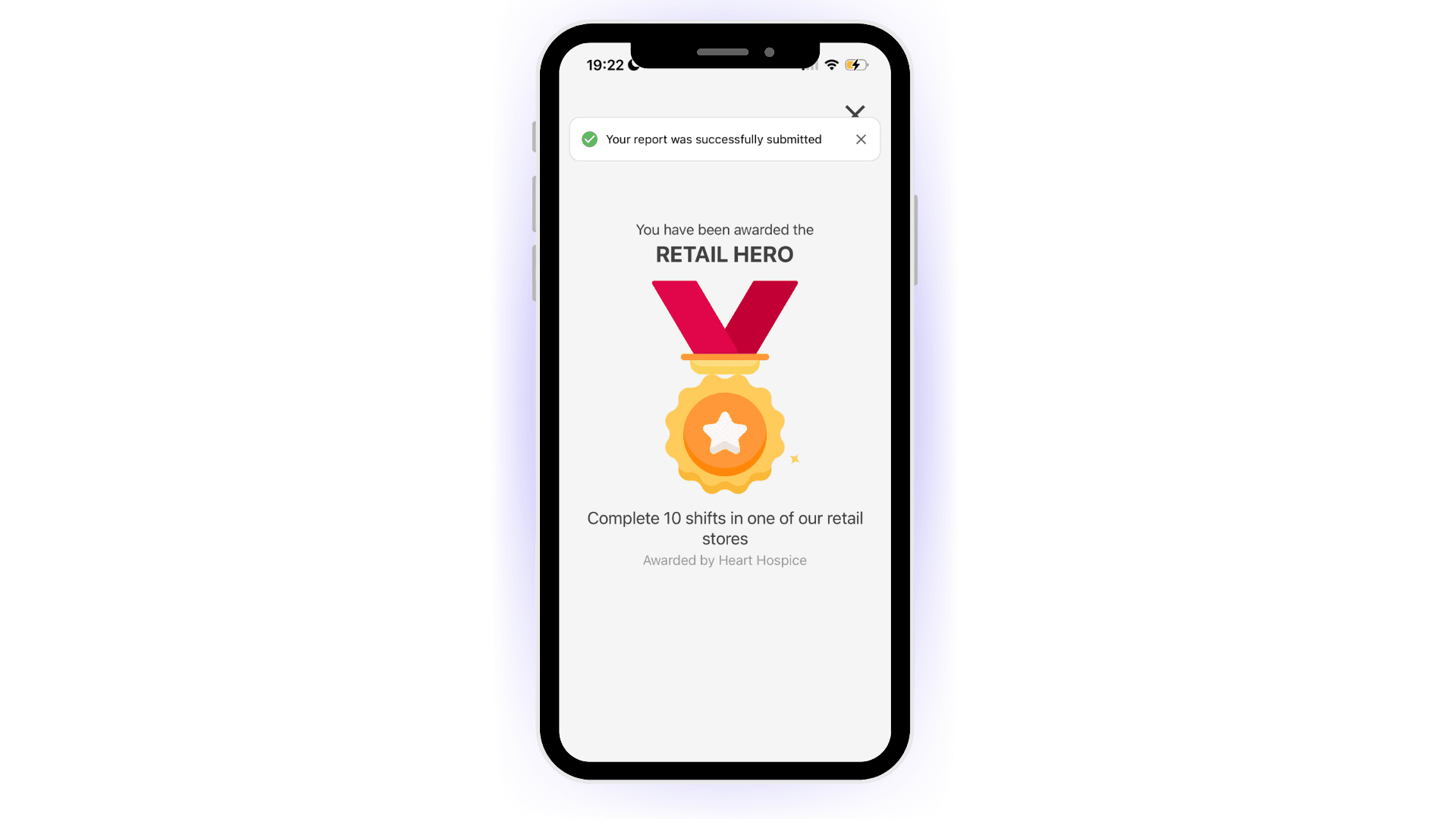
Because badges are visible to volunteers, recognition becomes something they can see, feel proud of, and work towards.
Automation: consistent recognition without extra admin
The real challenge with recognition isn’t ideas - it’s consistency.
Volunteero’s automation rules ensure recognition happens reliably, without relying on manual effort.
Recognising milestones automatically
Organisations can automate recognition based on:
Length of service (e.g. 6 months, 1 year, 5 years)
Total volunteering time or hours contributed
Completion of onboarding or training
And many more
Once rules are set, Volunteero handles the rest - ensuring no milestone is missed.
Granular recognition when it matters
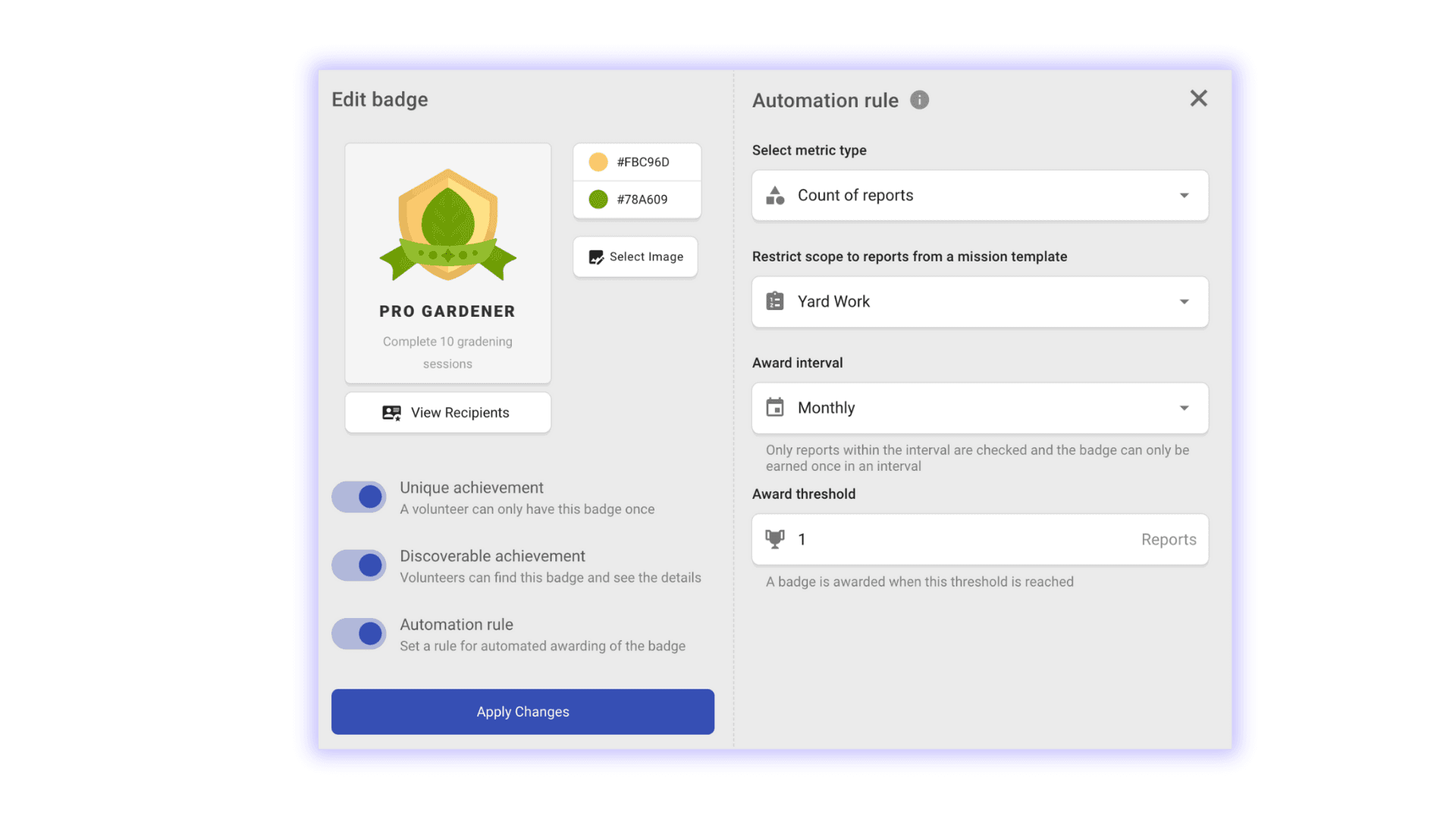
For organisations that want more detailed recognition, Volunteero supports granular automation.
For example:
Recognising volunteers who complete 5 shifts in a month
Highlighting sustained participation during busy periods
Celebrating consistent contributors, not just long-term ones
This allows recognition to reflect recent effort, not just historical involvement.
Why automation improves fairness and inclusion
Manual recognition often unintentionally favours:
The most visible volunteers
Those working closely with staff
Small or central teams
Automated recognition ensures:
Everyone is measured by the same criteria
Contributions are recognised evenly
Quiet, behind-the-scenes volunteers are included
This creates a fairer and more inclusive recognition culture.
From occasional praise to embedded culture
When recognition is automated and data-driven, it stops being an occasional task and becomes part of the volunteer experience.
Volunteers:
Feel seen and valued
Understand how their contribution matters
Stay motivated and engaged
Staff:
Save time
Avoid manual tracking
Maintain consistency at scale
Simple systems create meaningful recognition
Volunteer recognition doesn’t need to be complex, time-consuming, or inconsistent.
By combining:
Accurate volunteer data
Customisable badges
Automated recognition rules
Volunteero helps organisations embed recognition into everyday volunteering - simply, consistently, and sustainably.
Interested in seeing how automated volunteer recognition works in practice?
We’d be happy to show you how organisations are using Volunteero to recognise volunteers without adding administrative burden.
How to Make Volunteer Recognition Simple, Consistent, and Automated
Volunteer recognition is widely understood to be important - yet many organisations struggle to do it consistently.
Not because they don’t care, but because recognition is often manual, fragmented, and dependent on someone remembering to do it. Over time, this leads to uneven experiences where some contributions are celebrated and others go unnoticed.
The solution isn’t more effort. It’s better systems.
Recognition starts with knowing what’s really happening
Meaningful recognition begins with visibility.
To recognise volunteers well, organisations need to understand:
Who is active
How often volunteers are contributing
What roles or shifts they’re completing
How long they’ve been involved
Without reliable data, recognition becomes guesswork.
Many organisations rely on spreadsheets, disconnected tools, or anecdotal knowledge - making it difficult to recognise contributions accurately or fairly, especially as programmes grow.
How Volunteero makes recognition easier from the start
Volunteero is designed to make volunteer activity easy to track, monitor, and understand.
Using Volunteero, organisations can:
See volunteer activity in real time
Track shifts, hours, and engagement automatically
Monitor participation across roles and programmes
Access consistent data without manual updates
This creates a solid foundation for recognition that is informed, timely, and inclusive.
Badges: visible, meaningful recognition
One of the simplest ways to recognise volunteers is through badges - and Volunteero makes them easy to use and fully customisable.
Customisable to match your organisation
Volunteero badges can be:
Named to reflect your culture and values
Designed around specific achievements
Applied across different programmes or roles
Badges might recognise:
Length of service
Commitment milestones
Training completion
Programme-specific achievements
Because badges are visible to volunteers, recognition becomes something they can see, feel proud of, and work towards.
Automation: consistent recognition without extra admin
The real challenge with recognition isn’t ideas - it’s consistency.
Volunteero’s automation rules ensure recognition happens reliably, without relying on manual effort.
Recognising milestones automatically
Organisations can automate recognition based on:
Length of service (e.g. 6 months, 1 year, 5 years)
Total volunteering time or hours contributed
Completion of onboarding or training
And many more
Once rules are set, Volunteero handles the rest - ensuring no milestone is missed.
Granular recognition when it matters
For organisations that want more detailed recognition, Volunteero supports granular automation.
For example:
Recognising volunteers who complete 5 shifts in a month
Highlighting sustained participation during busy periods
Celebrating consistent contributors, not just long-term ones
This allows recognition to reflect recent effort, not just historical involvement.
Why automation improves fairness and inclusion
Manual recognition often unintentionally favours:
The most visible volunteers
Those working closely with staff
Small or central teams
Automated recognition ensures:
Everyone is measured by the same criteria
Contributions are recognised evenly
Quiet, behind-the-scenes volunteers are included
This creates a fairer and more inclusive recognition culture.
From occasional praise to embedded culture
When recognition is automated and data-driven, it stops being an occasional task and becomes part of the volunteer experience.
Volunteers:
Feel seen and valued
Understand how their contribution matters
Stay motivated and engaged
Staff:
Save time
Avoid manual tracking
Maintain consistency at scale
Simple systems create meaningful recognition
Volunteer recognition doesn’t need to be complex, time-consuming, or inconsistent.
By combining:
Accurate volunteer data
Customisable badges
Automated recognition rules
Volunteero helps organisations embed recognition into everyday volunteering - simply, consistently, and sustainably.
Interested in seeing how automated volunteer recognition works in practice?
We’d be happy to show you how organisations are using Volunteero to recognise volunteers without adding administrative burden.
How to Make Volunteer Recognition Simple, Consistent, and Automated
Volunteer recognition is widely understood to be important - yet many organisations struggle to do it consistently.
Not because they don’t care, but because recognition is often manual, fragmented, and dependent on someone remembering to do it. Over time, this leads to uneven experiences where some contributions are celebrated and others go unnoticed.
The solution isn’t more effort. It’s better systems.
Recognition starts with knowing what’s really happening
Meaningful recognition begins with visibility.
To recognise volunteers well, organisations need to understand:
Who is active
How often volunteers are contributing
What roles or shifts they’re completing
How long they’ve been involved
Without reliable data, recognition becomes guesswork.
Many organisations rely on spreadsheets, disconnected tools, or anecdotal knowledge - making it difficult to recognise contributions accurately or fairly, especially as programmes grow.
How Volunteero makes recognition easier from the start
Volunteero is designed to make volunteer activity easy to track, monitor, and understand.
Using Volunteero, organisations can:
See volunteer activity in real time
Track shifts, hours, and engagement automatically
Monitor participation across roles and programmes
Access consistent data without manual updates
This creates a solid foundation for recognition that is informed, timely, and inclusive.
Badges: visible, meaningful recognition
One of the simplest ways to recognise volunteers is through badges - and Volunteero makes them easy to use and fully customisable.
Customisable to match your organisation
Volunteero badges can be:
Named to reflect your culture and values
Designed around specific achievements
Applied across different programmes or roles
Badges might recognise:
Length of service
Commitment milestones
Training completion
Programme-specific achievements
Because badges are visible to volunteers, recognition becomes something they can see, feel proud of, and work towards.
Automation: consistent recognition without extra admin
The real challenge with recognition isn’t ideas - it’s consistency.
Volunteero’s automation rules ensure recognition happens reliably, without relying on manual effort.
Recognising milestones automatically
Organisations can automate recognition based on:
Length of service (e.g. 6 months, 1 year, 5 years)
Total volunteering time or hours contributed
Completion of onboarding or training
And many more
Once rules are set, Volunteero handles the rest - ensuring no milestone is missed.
Granular recognition when it matters
For organisations that want more detailed recognition, Volunteero supports granular automation.
For example:
Recognising volunteers who complete 5 shifts in a month
Highlighting sustained participation during busy periods
Celebrating consistent contributors, not just long-term ones
This allows recognition to reflect recent effort, not just historical involvement.
Why automation improves fairness and inclusion
Manual recognition often unintentionally favours:
The most visible volunteers
Those working closely with staff
Small or central teams
Automated recognition ensures:
Everyone is measured by the same criteria
Contributions are recognised evenly
Quiet, behind-the-scenes volunteers are included
This creates a fairer and more inclusive recognition culture.
From occasional praise to embedded culture
When recognition is automated and data-driven, it stops being an occasional task and becomes part of the volunteer experience.
Volunteers:
Feel seen and valued
Understand how their contribution matters
Stay motivated and engaged
Staff:
Save time
Avoid manual tracking
Maintain consistency at scale
Simple systems create meaningful recognition
Volunteer recognition doesn’t need to be complex, time-consuming, or inconsistent.
By combining:
Accurate volunteer data
Customisable badges
Automated recognition rules
Volunteero helps organisations embed recognition into everyday volunteering - simply, consistently, and sustainably.
Interested in seeing how automated volunteer recognition works in practice?
We’d be happy to show you how organisations are using Volunteero to recognise volunteers without adding administrative burden.


©2026, Volunteero All Rights Reserved
©2026, Volunteero All Rights Reserved
©2026, Volunteero All Rights Reserved