

The future of volunteering: trends, younger volunteers and recruitment

In short
Organisations preparing for the future of volunteering should make it easy to join and easy to come back, and put the volunteer experience first. Panellists from St John Ambulance, Guide Dogs and Rob Jackson Consulting also urged them to trust younger volunteers to lead, manage risk rather than avoid it, and invite inactive volunteers back before recruiting more.
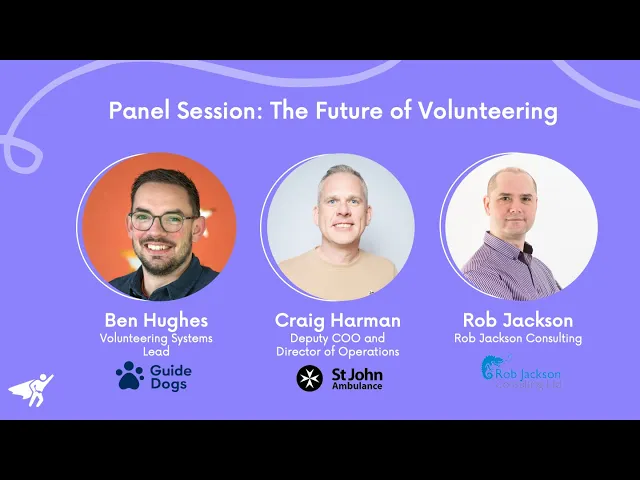
At the Volunteero Summit 2023, Craig Harman from St John Ambulance, Ben Hughes from Guide Dogs and consultant Rob Jackson discussed the future of volunteering. They covered trends, younger volunteers, risk, trust in digital tools and the recruitment drought.
Key points
Make it easy to join and easy to come back, including for people who dip in and out.
Put the volunteer experience first, and show volunteers the difference their time makes.
Trust younger volunteers to lead, rather than fitting them into roles designed for someone else.
Manage risk rather than avoid it, because too many obstacles push volunteers to work around you.
Before recruiting more people, find out why inactive volunteers stopped and invite them back.
Watch the full session below, including the closing speed round on the best ways to thank volunteers they’d seen. Under the video, we’ve summarised the key takeaways.
Volunteering trends to plan for
The health legacy of the pandemic. Rob urged organisations to prepare for its long-term effects on mental and physical health, including how they’d support a volunteer and their team through serious illness.
Easier ways in and back. Ben expects people to give less time more often, or to dip in and out. They should be able to return without jumping through every hoop again.
Experience over service delivery. Craig argued that organisations need to be good news, inspire people and give them a positive experience. Poor culture means volunteers keep churning through.
How to engage younger volunteers
Rob’s advice:
Define what younger means. In some organisations, younger means people around 50, not teenagers.
Don’t try to be cool if you’re not part of the generation you want to reach.
Trust young people, let go of control and let them take the lead.
Redesign roles to work for a 16-year-old, rather than squeezing them into old boxes.
Craig described St John Ambulance cadets acting as ambassadors in their communities, including on TikTok. When mistakes happened, the answer was to educate rather than block access. Ben added that people want to see their impact. Guide Dogs is working on telling volunteers who raise a puppy for a year about the difference that dog goes on to make.
Managing risk with volunteers
Craig called for grown-up conversations about reasonable ways to reduce risk. The biggest risks are the ones you don’t know about, and if a sensible request meets too many obstacles, volunteers may simply do it anyway without telling you. The panel’s wider point: practise risk management, not risk avoidance, and remember that pay doesn’t equal competence.
Building trust in digital tools
Be honest about why you’re introducing technology, including efficiency, and about how you use volunteers’ data.
Use technology with intent, and keep the human contact where people do it best.
Let volunteers use the channels they prefer, with one back-office system collecting the same information.
How to tackle the volunteer recruitment drought
Rob’s view is that more recruitment isn’t the answer if people don’t want the roles on offer. Colleagues need to plan around an hour a month, not two days a week for years. Craig compared joining a charity with ordering food or proving your identity on a phone: keep it simple and reply fast. Be upfront when a role, such as ambulance crew, takes many months of training, and create quick, one-off ways to get involved.
Craig also suggested asking whether you need to recruit at all. His team planned a 12-week sprint to contact volunteers who hadn’t been active for a year, find out why and ask what they’d like to do next. Since the panel, the Community Life Survey 2024/25 found that 17% of adults in England volunteered formally at least once a month, down from 23% in 2019/20.
A simpler way in with Volunteero
With Volunteero, a configurable application form can start an onboarding journey automatically, with stages for agreements, e-learning, background checks and references. Book a demo to see how it works.
Related reading
About the panel
At the time of the panel, Craig Harman was Deputy Chief Operating Officer and Director of Operations at St John Ambulance, Ben Hughes was Volunteer Systems Lead at Guide Dogs, and Rob Jackson was Director of Rob Jackson Consulting Ltd.
Written by
Co-founder and CEO
Ashley Staines is the co-founder and CEO of Volunteero. After seven years in investment banking, he started it to make volunteering easier to organise.


