

Flexible volunteering: moving beyond micro-volunteering

In short
Flexible volunteering redesigns the whole volunteer journey around the outcomes an organisation needs, rather than adding micro-volunteering roles at the edges, Elena Laguna of Rewired explained. It needs clear expectations, peer support and backing from leaders, HR, learning and development, data colleagues and volunteers, and it will show up any gaps in inclusion.
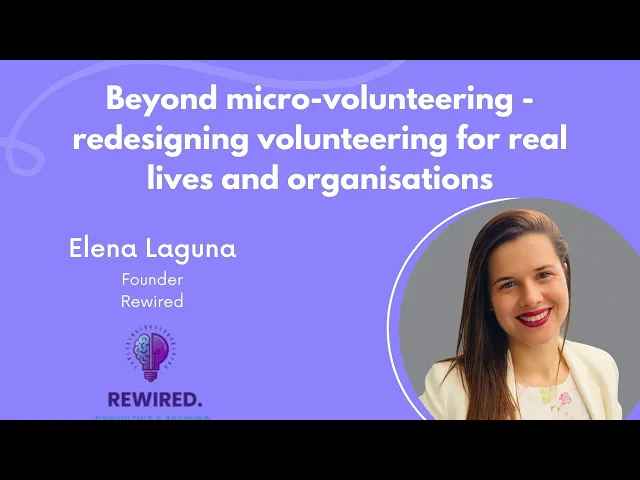
In this Lunch and Learn, Elena Laguna, founder of Rewired and formerly in senior roles at the British Red Cross, Oxfam and St John Ambulance, introduced flexible volunteering, or flex-volunteering: a people-centred model that goes beyond micro-volunteering. She explained what it is and isn’t, why it starts with outcomes rather than roles, and who you need on side to make it work.
Key points
Volunteering isn’t broken, but models built for people with plenty of spare time are.
Micro-volunteering widened access, but it was often treated as an add-on for a few roles.
Flexible volunteering redesigns the whole volunteer journey across the organisation, not just the hours on a role description.
Start with the outcomes you need, then look for the skills, experience and motivations that deliver them.
No single team can do it alone: it needs leaders, HR, learning and development, data colleagues and volunteers themselves.
Watch the full session below, including the four-step peer coaching exercise she set for working through a real flexible volunteering challenge. Under the video, we’ve summarised the key takeaways.
Why micro-volunteering isn’t enough
In Elena’s view, traditional volunteering works best for people with time to spare, in a society that has since changed. Micro-volunteering opened the door to more people, but too often it sat at the edge of a programme rather than at its core. The Community Life Survey 2024/25 found that 17% of adults in England volunteered formally at least once a month, down from 23% in 2019/20, and rates differ between ethnic groups. People still want to give their time. The barriers are in our systems.
What is flexible volunteering?
Flexible volunteering is not:
Changing the hours in a role description.
A line in an advert saying everyone is welcome. Show people how small contributions make a difference.
Letting volunteers do whatever they like. It needs clear expectations, two-way feedback and connection, or people become isolated and drift away.
It is an organisation-wide redesign, systems included, built around transferable skills and what people can bring rather than how well they fit a mould. It works best with peer support and mentoring, so busy line managers aren’t the only source of welcome and feedback.
Start with outcomes, not roles
Elena described flexible volunteering as a strategy question first. When the impact you want is clear, work can be delivered differently, skills can be used more creatively and contributions don’t depend on fixed hours. Put outcomes ahead of processes, and create a space where people feel safe to make mistakes and have the support to learn.
How to get your organisation behind flexible volunteering
Elena’s leadership road map:
Win executive support. Speak their language: risk, strategic alignment and financial efficiency.
Show each team what’s in it for them, from fundraising to services.
Co-design with volunteers, choosing carefully who joins your working groups.
Bring in HR and EDI colleagues to set line manager expectations, support culture change and remove barriers.
Work with learning and development on manager capability, role-specific skills, communities of practice and more flexible onboarding.
Pilot before you scale to refine the model and build confidence.
Use data on engagement, finances and performance to track progress and show impact.
Flexible volunteering exposes inclusion gaps
Flexible volunteering won’t fix poor diversity. It will show it up. Elena urged an honest look at who stays, who leaves and who never joins, alongside satisfaction scores and any bullying or harassment reports. Without psychological safety and belonging, new volunteers won’t stay. Her closing reminder: organisations involving volunteers aren’t factories, and their job is to create meaningful experiences that make a real difference.
Quick tasks with Volunteero
Volunteero’s microvolunteering missions work well for quick tasks and can be created and published in seconds, and with automated onboarding a volunteer can go from application to doing something valuable in minutes. Book a demo to see how it works.
Related reading
About Elena
Elena Laguna is a trainer, facilitator and consultant who supports those who manage, lead and work alongside volunteers. She founded Rewired after senior roles at the British Red Cross, Oxfam and St John Ambulance. You can contact Elena at hello@elenalaguna.com.
Written by
Co-founder and CEO
Ashley Staines is the co-founder and CEO of Volunteero. After seven years in investment banking, he started it to make volunteering easier to organise.


