

Communities of action: how to build a volunteer community that lasts

In short
Building a community of supporters works better than constantly recruiting new faces, according to Chris Wade of Time for Impact. Map who you reach and who you’re missing, offer a ladder of participation so people can step up or down instead of leaving, and look beyond your area to communities of interest, identity and need. Treat supporters as customers.
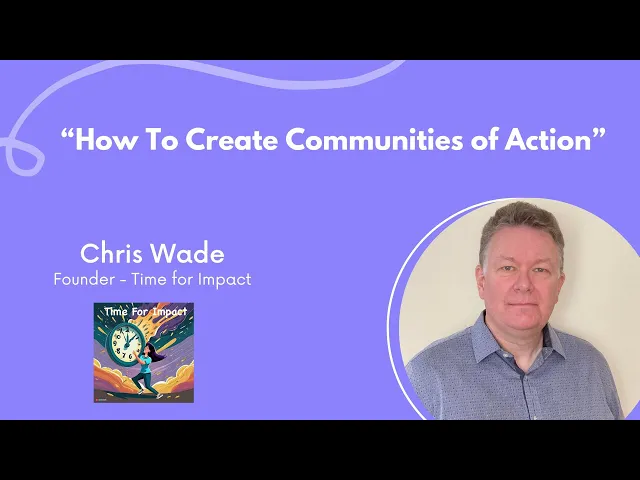
In this Lunch and Learn, Chris Wade, founder of Time for Impact, explained why building a community of supporters works better than constantly recruiting new faces. He covered mapping your support base, ladders of participation, communities of interest, identity and need, and treating volunteering as marketing.
Key points
Recruiting is slow and costly, so put as much thought into keeping supporters as finding new ones.
Mapping every layer of your support base shows you who you’re reaching and who you’re missing.
A ladder of participation gives people small first steps, and somewhere to go when life changes instead of leaving.
Communities of interest, identity and need reach people well beyond your local area.
Treat supporters as customers, not resources: understand what they want, then market to them.
Watch the full session below, including two short videos on shared purpose. Under the video, we’ve summarised the key takeaways.
Map your support base with the onion
Chris asks teams to draw their supporters as the layers of an onion. At the centre are the people closest to your cause, such as the people you serve and their families. Further out are friends, neighbours, colleagues and people who’ve heard a talk: many more people, with a looser link. Ask which layers you reach and which you’re missing.
Build lifetime value, not just fill vacancies
Chris’s view is that a good supporter journey keeps someone involved for years, rather than only growing what they give. That takes succession planning and close work with fundraising teams. The same person might donate, campaign and volunteer, so don’t argue over whose supporter they are.
Create a ladder of participation
Offer opportunities at every level of commitment that you can realistically sustain, such as:
Signing up for a newsletter
Sharing your posts or taking over your social media
Giving a talk at a school, faith group or sports club
Answering a survey or writing to their MP
Sharing skills or lived experience on a short co-production project
Volunteering regularly
The ladder works both ways. When someone retires, starts a job or their health changes, they can step down rather than leave, and come back later. Flexibility matters: in NCVO’s Time Well Spent 2023 research, not wanting an ongoing commitment was the most common reason people who hadn’t volunteered recently gave (33%).
Communities of interest, identity and need
Technology means you’re no longer limited to people nearby. Chris described three kinds of community:
Interest: an environmental charity could bring together anglers who care about river health. At the MND Association, Chris’s former charity, tech volunteers at hackathons helped create a book that people with MND can read aloud to bank their voice.
Identity: faith groups, single parents or others with their own perspective on your cause.
Need: the people you support, who can shape services, campaign and offer each other peer support.
Treat volunteering as a marketing challenge
People could be doing anything else with their time, so Chris treats supporters as customers. Write simple personas: what motivates people, where they look for opportunities and how they like to hear from you. Use language that works for each audience, which often isn’t “volunteering”. Shape changes with your existing volunteers, and keep testing.
Questions from the session
How can a national charity reach local communities?
Through its local volunteers, who can join local groups, including WhatsApp groups, in a way staff can’t. Chris’s hypothesis is that connecting volunteers to their community helps you recruit and keep them.
How do you show volunteers the difference they make?
Measure your impact and share it back. It isn’t always financial: case studies count too.
Giving every supporter a way in
In Volunteero, missions can be quick tasks such as sharing a post or completing a survey, one-off activities or ongoing roles, so there’s a step for every level of commitment. Group chats and newsfeeds keep your community connected between activities, with over 90% of messages read. Book a demo to see how it works.
Related reading
About Chris
Chris Wade has spent 25 years leading charities and previously chaired the National Network of Volunteer Involving Agencies. He founded Time for Impact, which helps organisations rethink their volunteering strategy, and hosts its podcast. Find out more at timeforimpact.co.uk.
Written by
Co-founder and CEO
Ashley Staines is the co-founder and CEO of Volunteero. After seven years in investment banking, he started it to make volunteering easier to organise.


