

Trauma-informed volunteer management: why it matters and how to start

In short
Trauma-informed volunteer management means accepting you’ll never know everything someone has been through, and building in support from the start. Many volunteers bring lived experience of your cause, and hearing difficult stories can lead to vicarious trauma. Maria McEvoy sets out six principles: safety, trust, choice, collaboration, empowerment and cultural consideration.
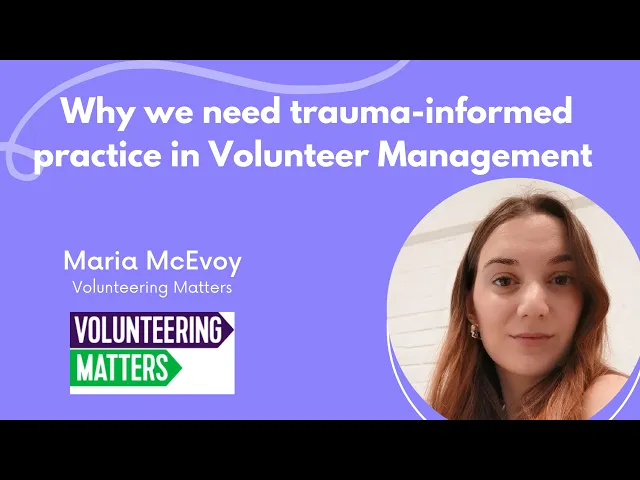
In this Lunch and Learn, Maria McEvoy, founder of Inclusive Volunteering and, at the time, lead of the Grandmentors programme at Volunteering Matters, explained why trauma-informed practice should reach volunteers, not only the people charities support. She covered what it means, why it matters and how its six principles work day to day.
Key points
Trauma-informed practice starts from accepting you’ll never know everything someone has been through.
Many volunteers join because of lived experience of your cause, which can make some roles harder.
Hearing difficult stories can lead to vicarious trauma, so support needs to be there from the start.
Six principles guide the approach: safety, trust, choice, collaboration, empowerment and cultural consideration.
Volunteer managers aren’t counsellors, so know where to point people for help.
Watch the full session below, including her answers on handling problems with volunteers and supporting someone through upsetting training. Under the video, we’ve summarised the key takeaways.
What is trauma-informed practice?
Maria described it as recognising that everyone brings experiences you can’t see, and building in safeguards so you support people well. It means reading behaviour such as withdrawing or a raised voice as a way of coping, not as someone being difficult. The UK Government’s working definition of trauma-informed practice (OHID, 2022) asks what a person needs, not what is wrong with them, and aims to avoid re-traumatisation. It was written for health and care services, but the same ideas apply to volunteers.
Why it matters in volunteer management
Lived experience: at the National Domestic Abuse Helpline, many volunteers were survivors, and supporting others could be hard.
Vicarious trauma: hearing difficult stories can affect wellbeing and wear down empathy over time.
Transference: a volunteer may bring feelings about their own past into someone else’s situation.
Retention and quality: well-supported volunteers stay longer and support people the way they’ve been supported.
The six principles of trauma-informed practice
Safety: include emotional safety in individual risk assessments. After a volunteer takes a safeguarding disclosure, someone else can lead the follow-up.
Trust and transparency: share your policies, keep people updated, even while a DBS check is pending, and be consistent.
Choice: if someone shares lived experience, or has an emotionally demanding day job, ask how they’d feel supporting someone in a similar situation. Some want a lighter role.
Collaboration: create peer support, such as online meet-ups where volunteers answer each other’s questions.
Empowerment and voice: validate feelings, ask how people want to move forward, and bring volunteers’ voices to trustee meetings.
Cultural consideration: address microaggressions by talking privately with the person, then check on anyone affected.
In training, Maria prefers to tell people plainly what’s coming and when, rather than relying on labels such as trigger warnings.
Helping volunteers and yourself cope
Maria suggested building a self-care plan in training: what each volunteer will do before and after a shift to clear their head, and a menu of things to do with five minutes, half an hour or a whole afternoon. Know your own limits too. Push for volunteers to access support such as mental health champions or an employee assistance programme, and ask your manager for help when you need it.
Questions from the session
How do you handle problems with a volunteer in a trauma-informed way?
Maria uses a re-engagement plan, not a disciplinary process: hear their side, explain why the policy exists, then agree next steps together, such as training, a different role or a break. After a safeguarding breach, parting ways may still be right.
What if a volunteer finds required training upsetting?
Offer to go through it one to one, at their pace, focusing on the actions they need to know.
Checking in with Volunteero
After each activity, volunteers can complete a mission report in Volunteero with your own questions, and certain answers can alert the right staff to check in. Book a demo to see how it works.
Related reading
About Maria
Maria McEvoy has 10 years’ experience in the voluntary sector, leading volunteering programmes at the Sea Cadets, London Fire Brigade, the National Domestic Abuse Helpline and The Kids Network. At the time of the session she led Grandmentors at Volunteering Matters, which supports care-experienced young people through volunteer mentoring. You can contact her through Inclusive Volunteering.
Written by
Co-founder and CEO
Ashley Staines is the co-founder and CEO of Volunteero. After seven years in investment banking, he started it to make volunteering easier to organise.


