

Volunteer rewards and recognition: how to recognise corporate and community volunteers

In short
Rewards are things you give, like badges or vouchers, while recognition is how you acknowledge someone and mostly costs time. Elaine McCulloch suggests asking volunteers what matters to them, keeping corporate volunteers in touch with your news, and using low-cost ideas such as handwritten cards. Take care with cash-value rewards tied to hours, which can look like payment.
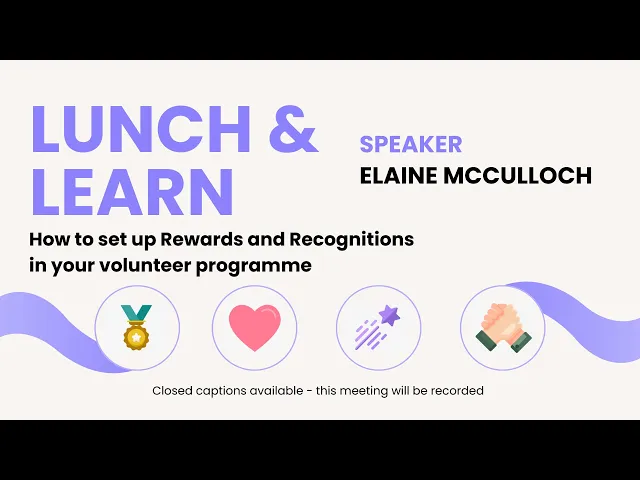
In this Lunch and Learn, Elaine McCulloch, a community and business engagement specialist who previously led volunteering at Sage in the UK and Ireland, shared how to reward and recognise volunteers. She covered the difference between rewards and recognition, low-cost ideas, and how to recognise corporate and community volunteers.
Key points
A reward is a thing you give. Recognition is how you acknowledge someone, and it mostly costs time, not money.
Volunteers want to feel valued, heard and aware of the difference they make. Ask them what matters.
Corporate and community volunteers need different approaches.
Many of the best ideas are free or cheap.
Rewards with a cash value linked to hours given can start to look like payment.
Watch the full session below, including the ideas volunteer managers swapped in the chat. Under the video, we’ve summarised the key takeaways.
Rewards and recognition: what’s the difference?
Rewards cost money: pin badges, certificates, awards or vouchers. Recognition costs time: remembering birthdays, a handwritten card or a reference when a volunteer applies for a job. In Elaine’s view, the smaller your budget, the more you should lean on recognition.
Start by asking volunteers what they want
Every group of volunteers is different, so ask them, through a volunteer survey or a simple suggestions box. When volunteer managers shared what their own volunteers ask for, the same themes came up: to feel valued and listened to, to know their impact, and to hear about the organisation’s plans.
Recognising corporate and community volunteers
Corporate volunteers are often thanked once and never heard from again, a missed chance to turn them into donors, fundraisers or regular volunteers. Elaine’s minimum: capture their details with the right consent, send a thank-you afterwards, and keep them in touch with your news. Read more on growing your corporate volunteer programme.
Long-serving community volunteers need to stay connected to your mission. Someone who joined years ago joined a different organisation from the one you run today, so Elaine recommended refreshing their onboarding now and then.
Low-cost ways to recognise volunteers
Thank-you cards, emails and calls. Handwritten cards stood out. For wording, see our guide to volunteer thank-you letters.
Social media spotlights and a volunteer of the month.
A wall of fame with photos of volunteers where visitors walk in.
Messages from the people you support, such as cards or recorded notes.
A personal summary of each volunteer’s year, in the style of the round-ups many apps now send.
Learning: free training, talks or a spare place at an event.
Check you have the right consents before sharing photos or messages.
A note on rewards tied to hours
Take care with rewards that have a cash value and are linked to time given, such as a voucher after a set number of hours. They can start to look like payment. Offering the same thing to all volunteers is safer. Our recap of volunteering and the law explains the tests to apply.
Don’t forget the exit
Thank people when they leave and ask about their experience. It keeps them as advocates and helps you spot patterns. See our guide to volunteer retention.
Recognition that happens on time, every time
Volunteero’s Recognition tools send custom badges automatically when volunteers reach milestones, such as length of service or total volunteering time, and built-in surveys help you ask volunteers what they value. Book a demo to see how it works.
Related reading
About Elaine
Elaine McCulloch has worked in and around volunteering for nearly 20 years, most recently as Foundation Manager for the UK and Ireland at Sage, where she led volunteering for its staff. She’s a lifelong member of Girlguiding.
Written by
Co-founder and CEO
Ashley Staines is the co-founder and CEO of Volunteero. After seven years in investment banking, he started it to make volunteering easier to organise.


